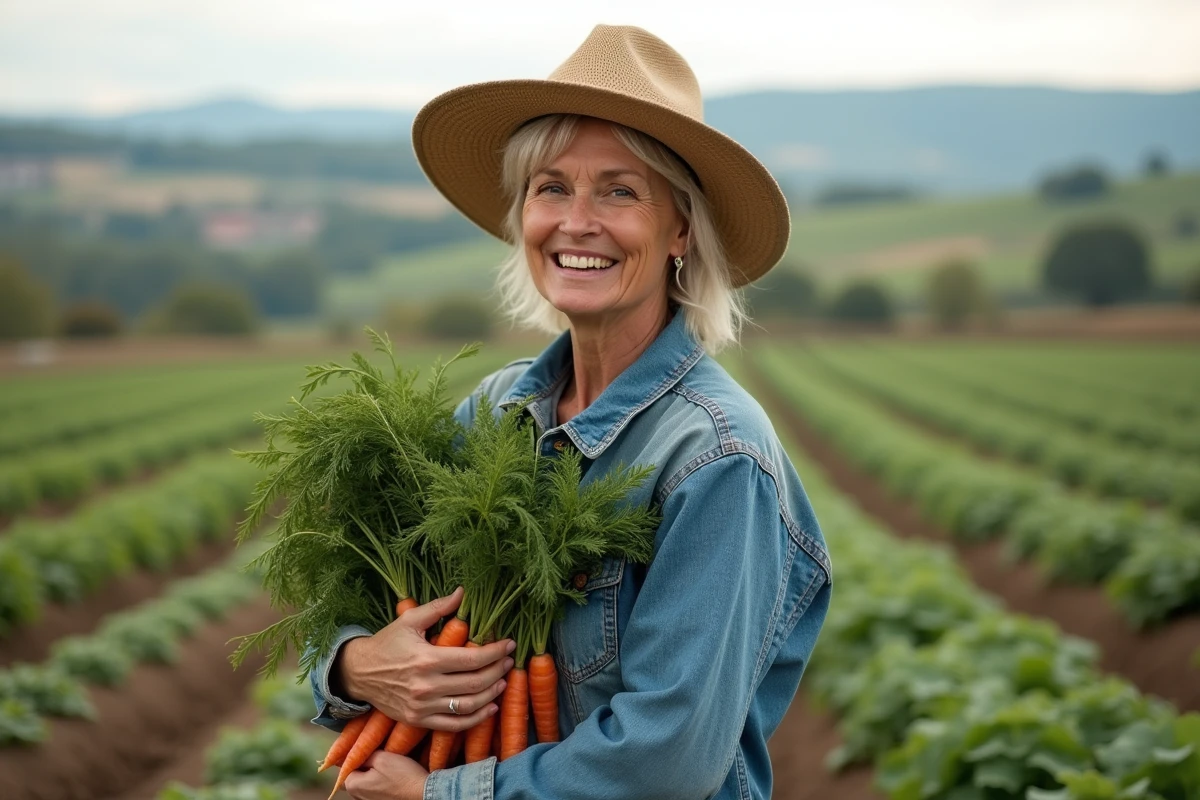
In France, less than 20% of farms practice forms of agriculture classified as “peasant,” according to figures from the Ministry of Agriculture. Yet, these farms concentrate the majority of agricultural jobs and ensure a diversity of productions that is rarely valued by conventional circuits.
In the face of the industrial logic and specialization that are spreading everywhere, another path is being forged in the shadows. This dominant model has not eliminated practices that focus on polyculture, autonomy, and resource preservation. Amid the multiplication of standards, economic constraints, and rising citizen expectations, other ways of producing and consuming are emerging. These alternatives, often driven by local collectives, associations, or pioneering territories, carve out a path between resistance and innovation.
Why peasant agriculture is essential in the face of environmental challenges
At a time when climate disruptions are intensifying and biodiversity is collapsing, peasant agriculture stands as a bulwark. It is distinguished by its ability to preserve resources, maintain soil fertility, and sustain vibrant landscapes. On these farms, there is a respect for natural cycles, a multiplicity of crops, and a real autonomy of the operations. This approach, far from the standardized industrial logic, adjusts to the particularities of each territory. It protects ecosystems instead of weakening them.
The FAO and the UN remind us: more than 70% of global food production comes from small family farms. Here, food security is at stake. Peasants, through their work, provide a concrete response to the upheavals of the climate. In France, public authorities and the Common Agricultural Policy of the European Union are multiplying declarations of intent to defend these models. However, the reality on the ground shows that conventional farms still hold the upper hand.
The “nature peasants” rely on know-how passed down from generation to generation, but also on discreet innovations. Preserving water quality, replanting hedges, promoting pollination: this is the daily life of these farmers. Their approach meets a demand for sustainability and equity. It outlines an agriculture that nourishes without impoverishing. The site Paysans.org provides an overview of these practices, giving voice to those who are concretely transforming the countryside. Preserving agricultural land, facilitating the transfer of farms, slowing down soil artificialization: these are challenges that peasant agriculture chooses to confront, without yielding to the race for yield.
Agroecology and sustainable practices: what concrete solutions to transform our countryside?
On the ground, agroecological transition takes shape in the reality of villages, farms, and cooperatives. Far from speeches, sustainable agricultural practices are built step by step, around initiatives that shift the lines. Here, agroecology is not an abstract concept: it relies on peasant experience, knowledge sharing, and cooperation with researchers and environmental professionals.
In this movement, some farms serve as living laboratories. New rotations, permanent soil cover, agroforestry are experimented with. These experiences do not stop at technique: they are accompanied by reflections on the transmission of know-how, the pooling of equipment, and the development of short circuits that bring producers and consumers closer together.
Here are some concrete examples of innovations that change the game:
- Agricultural robotics rethinks daily work, alleviating tedious tasks while preserving farm independence.
- Agricultural digital tools, used wisely, allow for the analysis of soil health, anticipation of water or input needs, and limitation of environmental impacts.
- Gentle biotechnologies enhance crop resilience to climate shocks, without resorting to heavy chemical solutions.
Cooperation is also a powerful driver. It facilitates the establishment of new farmers, encourages collective access to land, and gives rise to concerted actions to safeguard biodiversity. Actors in the solidarity ecological transition are committed to structuring local sectors, providing ongoing training for peasants, and developing economic models that restore meaning to food.
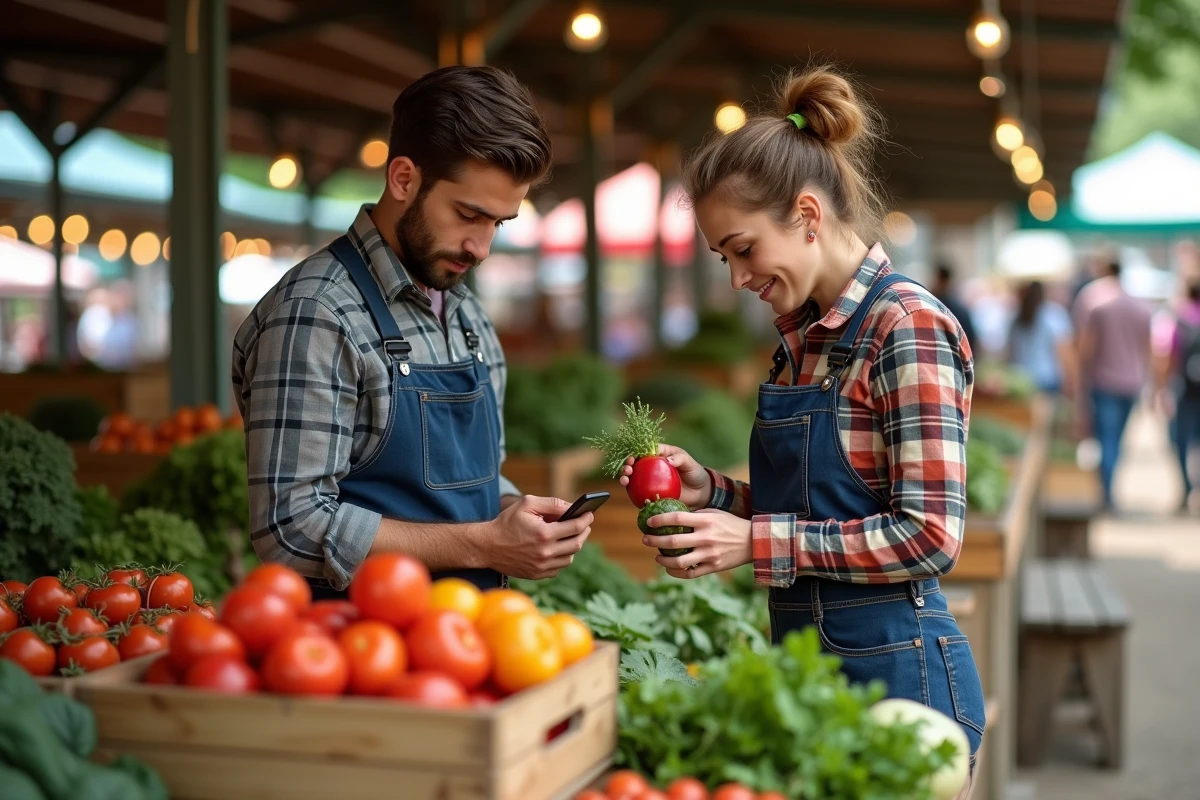
Inspiring initiatives and levers of action to support a solidary and responsible agriculture
The foundations mobilizing for agricultural transition have become structuring actors in the sector. The Fondation de France and the Fondation Daniel et Nina Carasso, for example, support numerous collective projects. Their action aims to strengthen the resilience of territories, guarantee access to agricultural land, and offer prospects for future farmers. These organizations support the creation of territorial food projects, where producers and local authorities join forces to develop short circuits and assert food sovereignty.
In this landscape, associative networks like La Via Campesina or CCFD-Terre Solidaire play a central role. They support training, defend farmers’ rights, and encourage the dissemination of agroecological practices. The movement also involves alliances between actors in the social and solidarity economy, who invent more democratic and open agricultural models.
Some levers of action stand out today:
- Collective purchase of agricultural land through solidarity funds to facilitate the establishment of new peasants.
- Technical and legal support for project leaders emerging from the ecological transition.
- Valuing local biodiversity through participatory and inclusive approaches.
Civil society is not a bystander. Citizens and consumers are mobilizing, through group purchases, AMAPs, or collective platforms, to concretely support peasants. These dynamics, driven by local initiatives, are gradually transforming the link between agricultural production and food, and restoring a central place to peasant agriculture in building a viable future. It is here, in this collective movement, that the promise of a vibrant, resilient, and solidary countryside is drawn, where each act of production becomes a story to tell.