
Improving your home on a daily basis doesn’t necessarily require major renovations or a significant budget. However, the topic covers very different realities depending on whether you are a homeowner or a tenant, whether you have a large living room or a studio under the eaves.
The most commonly shared approaches online focus on organization and cleaning, but they overlook a fundamental question: how to adapt your interior when you can’t touch the walls or drill holes?
Improving rental housing: what the lease really allows
The majority of decor and layout tips published online assume that the reader can install shelves, repaint, or set up wall storage. For tenants, these actions remain subject to the landlord’s approval, and may even be prohibited by the rental agreement.
Reversible modifications are the real playground for tenants. Freestanding furniture, repositionable adhesives, tension rods between two walls, curtains to separate spaces: these solutions cause no damage and can be removed in minutes during the exit inspection.
The key point to remember is that any improvement must be able to be dismantled without leaving a trace. This constraint guides choices towards freestanding furniture and lightweight accessories, which does not prevent achieving a polished result. To go further, you will find home advice on Maisons et Conseils that take these practical limits into account.
Durable low-tech solutions versus connected gadgets for the home
In recent years, the smart home market has multiplied accessories: smartphone-controlled bulbs, air quality sensors, robot vacuums. These gadgets provide services, but they share a common weakness: they stop working during a power outage or internet disruption.
An article from the Guardian dated April 2026 highlights a growing preference for sustainable low-tech hacks, such as organizers made from reclaimed wood, over energy-hungry high-tech gadgets. The reason cited is their resilience: a wicker basket or a pallet wood coat rack never breaks down.
When low-tech surpasses high-tech in interior design
The opposition is not binary. Some connected devices (a programmable thermostat, for example) do generate real energy savings. However, for the daily organization of a kitchen or an entryway, simple solutions remain more reliable and less costly to replace.
- A wall organizer made of wood or fabric costs a fraction of a motorized storage unit and is easy to repair.
- Repositionable adhesive hooks can hold several kilos and can be changed without a drill.
- A thick curtain used as a room divider replaces a motorized sliding panel while improving sound insulation.
The low-tech choice also protects against software obsolescence that regularly affects connected devices whose manufacturers cease support after a few years.
Light and layout: the two levers that change a room without renovation
Among all possible modifications, two have a disproportionate visual impact relative to their cost: light and furniture arrangement.
Multiplying light sources in the living room and kitchen
A single ceiling light flattens the volumes and creates shadowy areas. Adding two or three accent lamps (floor lamp, table lamp, string lights) is enough to transform the atmosphere of a living room or kitchen without any electrical intervention.
Warm color temperature bulbs, around 2,700 kelvins, create a more welcoming atmosphere than the cold white lights often installed by default. This replacement takes a few seconds and requires no tools.
Rethinking circulation in each room
Moving a sofa by twenty centimeters or rotating a dining table changes how one navigates the space. The goal is to clear wide circulation corridors, ideally at least sixty centimeters, so that passage remains fluid even in a small interior.
Furniture placed perpendicular to the wall better structures the space than a systematic alignment along the walls. This technique works particularly well in open living spaces where the living room, dining area, and kitchen coexist.

Decor and comfort in daily life: balancing aesthetics and use
Interior decoration generates a continuous flow of ideas on social media, but most trends rely on retouched photos taken in empty or staged homes for the shoot. Daily life imposes different criteria.
A machine-washable textile is better than a delicate fabric that stains at the first spilled coffee. A coffee table with a shock-resistant top is more suitable for a household with children than a tempered glass model. Daily comfort takes precedence over ephemeral visual effects.
- Opt for removable covers for sofas and cushions, allowing them to be washed or changed in color according to the seasons.
- Choose easy-to-maintain flooring materials in high-traffic areas (entryway, kitchen, hallway).
- Test the arrangement of a piece of furniture for a few days before finalizing it, to ensure it works in the actual routine.
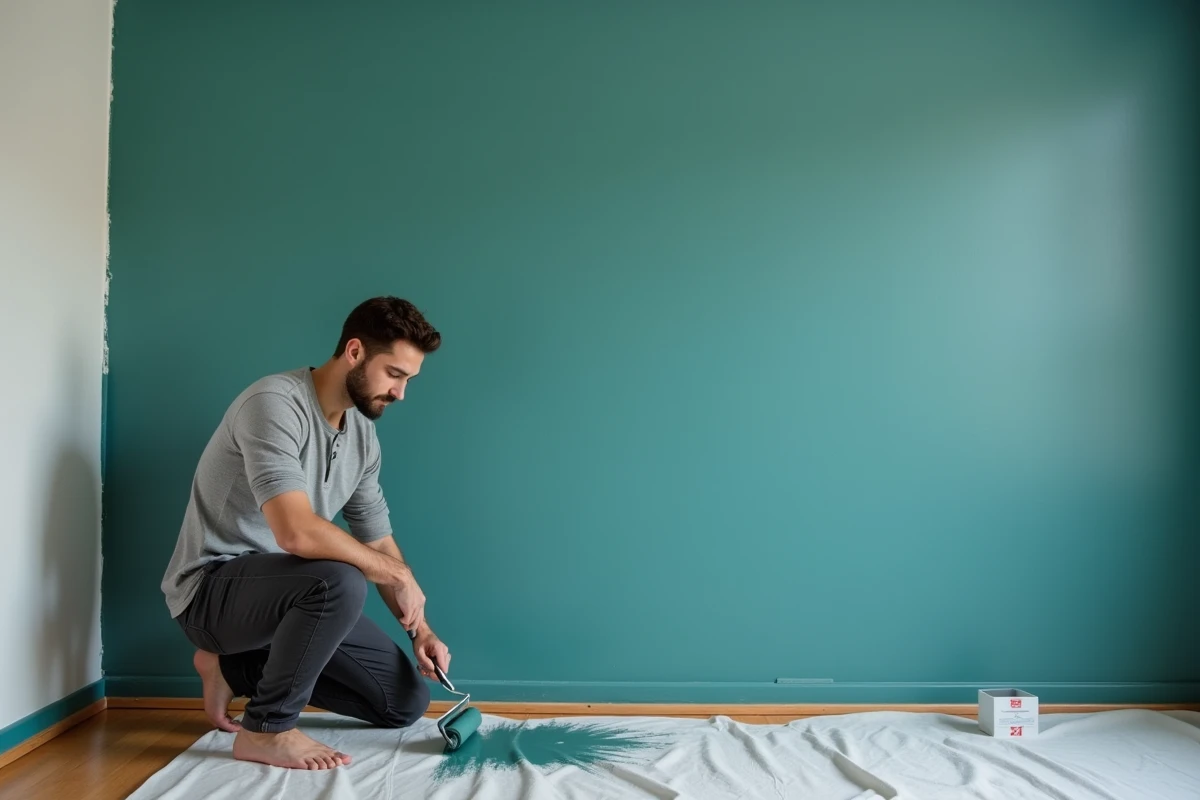
Field feedback varies on the durability of so-called “washable” paints sold in DIY stores: some hold up well over time, while others lose their finish after a few cleanings. It’s better to test on a small area before treating an entire room.
Improving your home on a daily basis relies less on accumulating tips and more on a few well-targeted choices. Better light, a rethought layout, materials suited to actual use: these three levers transform an interior without requiring building permits or renovation budgets.