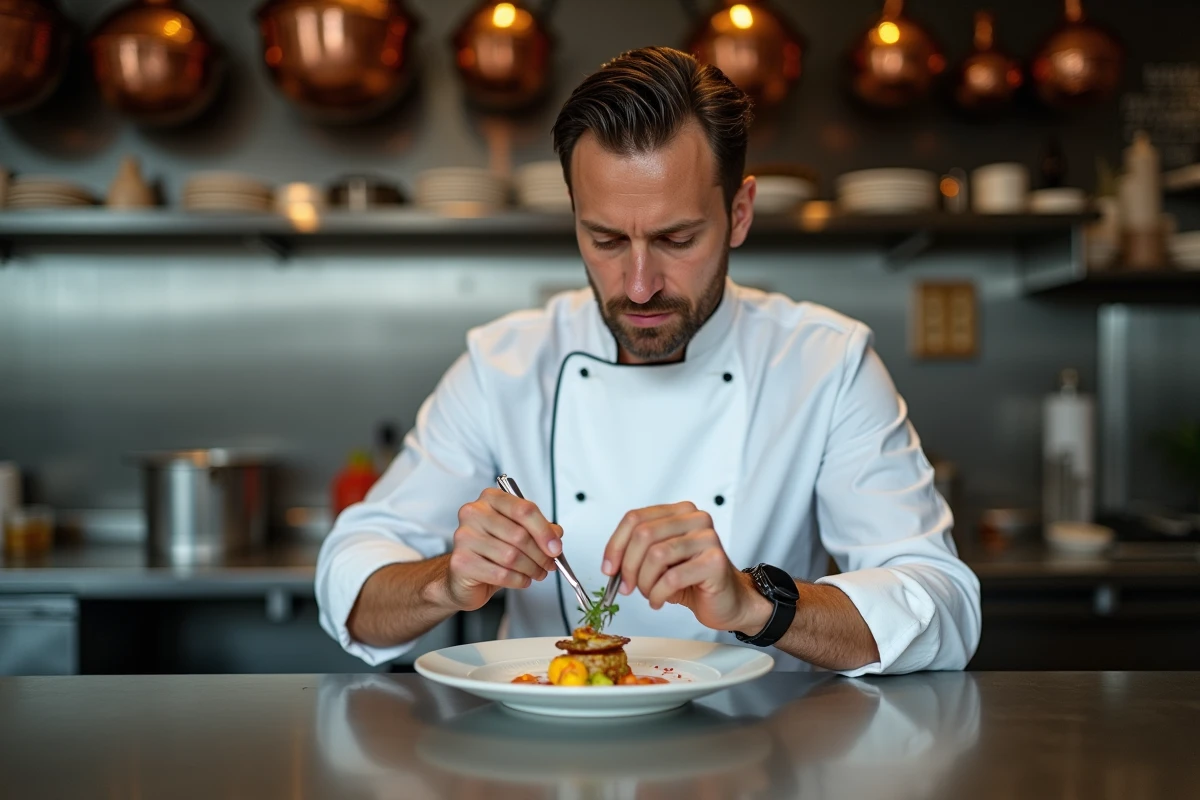
The title of best chef in the world does not rely on a single ranking. Several competitions and guides compete for the legitimacy of designating the most talented chef on the planet. The Bocuse d’Or, the Best Chef Awards, and the Michelin Guide operate according to very different criteria, juries, and methodologies, making any direct comparison tricky.
Bocuse d’Or, Best Chef Awards, and Michelin Guide: what each ranking really measures
Comparing these three references without understanding what they evaluate is akin to ranking athletes from different disciplines. A summary table helps to grasp the differences.
| Criterion | Bocuse d’Or | Best Chef Awards | Michelin Guide |
|---|---|---|---|
| Format | Live competition, timed event | Voting by a panel of professionals | Anonymous inspection of restaurants |
| What is evaluated | Technique, creativity, execution under pressure | Global influence of the chef (cuisine, impact, commitment) | Quality of the dish served to the customer |
| Frequency | Biennial | Annual | Annual (by country or region) |
| Notable recent winner | Paul Marcon (France) | Ceremony in Milan | Stars awarded per restaurant, not per chef |
The Bocuse d’Or remains the only competition where the chef cooks in real-time before a jury. The Best Chef Awards recognize a career and influence. The Michelin Guide, on the other hand, evaluates a restaurant and not an individual, even if the chef’s name is associated with it.
This distinction explains why the same chef can dominate one ranking without appearing in another. Paul Marcon won the Bocuse d’Or, which does not automatically grant him the top spot in the Best Chef Awards, and vice versa.
Paul Marcon at the Bocuse d’Or: a victory that transcends the competition
Thirty years after his father Régis, Paul Marcon won the Bocuse d’Or, becoming the ninth Frenchman to receive this title. The familial dimension of this victory has marked the culinary world well beyond the competition itself. As detailed by the Monde Gourmandises website, this accolade is part of a lineage that illustrates the transmission of French culinary know-how.
The format of the Bocuse d’Or imposes a constraint that other rankings ignore: the chef must produce a complete menu within a limited time, in front of an international audience and jury. The pressure of live execution filters different skills than those observed by a Michelin inspector during a classic meal.
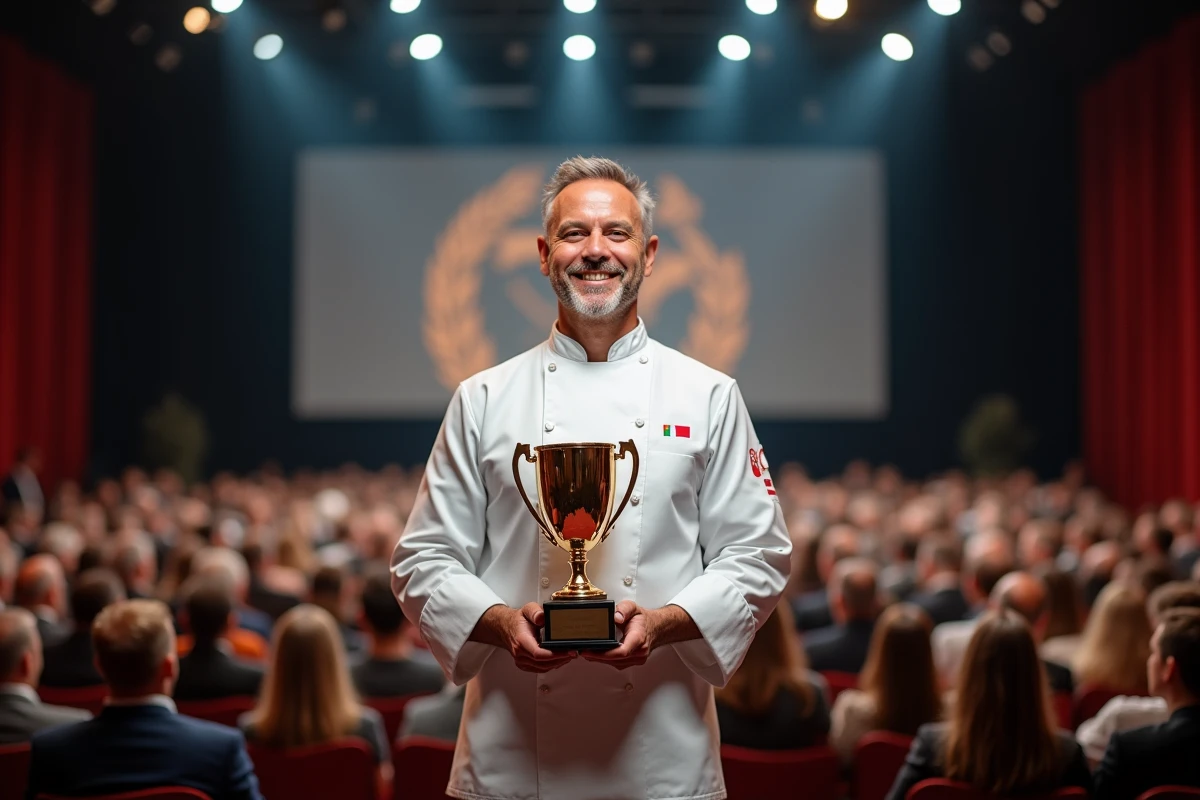
France has historically dominated this competition, with nine victories. This recurrence raises questions: does the format of the Bocuse d’Or, created in Lyon, favor a particular style of cuisine? The techniques of French gastronomy (sauces, elaborate garnishes, architectural plating) align with the evaluation criteria of the competition, giving a structural advantage to candidates trained in this tradition.
Best Chef Awards 2025: criteria that reshuffle the deck
The Best Chef Awards 2025 ceremony, held in Milan, crowned chefs based on a broader evaluation grid. The voting incorporates culinary creativity, as well as social commitment, sustainability, and the chef’s media influence.
A chef can be first in the Best Chef Awards without having a Michelin-starred restaurant. This gap reflects the evolution of the profession: a chef’s notoriety now comes through their media presence, their positions on sustainable food, and their ability to train the next generation.
Several profiles stand out in this type of ranking:
- Chefs leading multi-restaurant groups, like Alain Ducasse, whose network spans several countries and styles of cuisine
- Chefs engaged in sustainability efforts, who promote short supply chains and local producers
- Media figures whose influence extends beyond the restaurant, through shows, books, or social media
Conversely, a discreet chef running a single exceptional table can very well hold three Michelin stars without ever appearing in the Best Chef ranking. Visibility weighs as much as technique in this ranking.
Michelin stars and chef rankings: a common confusion
The Michelin Guide awards stars to restaurants, not to chefs. A chef who leaves their establishment does not keep their stars. This fundamental rule is often forgotten in discussions about the best chef in the world.
The most starred chefs in the world accumulate their distinctions by managing multiple establishments. Alain Ducasse, for example, has simultaneously run several starred restaurants in different countries. Martin Berasategui, a figure in Basque gastronomy, concentrates his stars on a limited number of tables in the Spanish Basque Country.
The total number of stars a chef has depends on the number of restaurants they oversee. A chef with a single triple-starred table may have a higher level of mastery than one who accumulates stars across ten addresses. The raw comparison of the number of stars obscures this nuance.

Anne-Sophie Pic remains the most starred French chef and one of the few women to hold three Michelin stars. Her presence in the rankings serves as a reminder that high-level gastronomy remains a field where women are largely underrepresented.
Which criterion to retain to designate the best chef in the world
The answer depends on what one values. The three main frameworks can be summarized as follows:
- Performance in competition (Bocuse d’Or) distinguishes technique and resilience under pressure, with Paul Marcon as the latest French laureate
- Global influence (Best Chef Awards) rewards a combination of culinary talent, commitment, and influence
- Consistency over time (Michelin stars) measures the ability to maintain a level of excellence in a given restaurant, year after year
No single ranking can claim to definitively designate the best chef in the world. The Bocuse d’Or crowns a competitor, the Best Chef Awards a thought leader, the Michelin Guide a craftsman of consistency. Paul Marcon, Alain Ducasse, and Anne-Sophie Pic each occupy a distinct place in this mapping of global gastronomy. Ultimately, the title of best chef depends on the lens chosen to evaluate it.