
Which disciplines are gaining ground in 2026, and which are stagnating despite their media exposure? Between the rise of free practice, the relative decline of traditional clubs, and the arrival of new training formats, this year’s sports trends paint a more fragmented picture than it seems. This article compares the actual dynamics, supported by data, to distinguish fleeting trends from underlying movements.
Free practice vs club sports: diverging trajectories
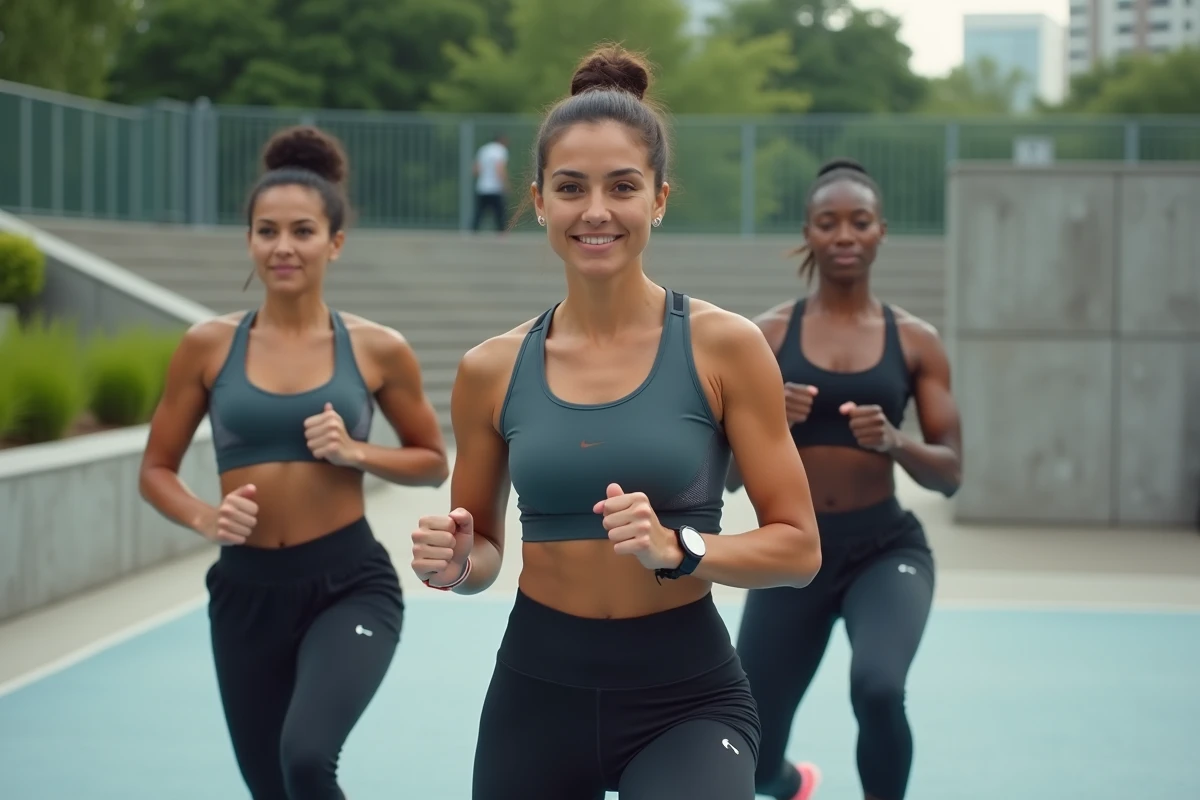
National surveys on sports practices show a growing gap between two modes of practice. Participation in sports clubs among 15-24 year-olds remains below the 2019 level, while autonomous practice (urban parks, low-cost gyms, mobile apps) is clearly on the rise.
This gap changes the interpretation of overall figures. When an article states that the majority of young people engage in sports each week, it aggregates two very different realities: on one side, licensed members slowly returning to federations, and on the other, a growing mass of practitioners outside of structured environments.
| Criterion | Club Practice | Free / Low-Cost Practice |
|---|---|---|
| Post-Covid Attendance (15-24 years) | Below the 2019 level | Marked increase |
| Average Monthly Cost | Higher (annual fee + license) | Reduced (flexible or free subscription) |
| Supervision | Qualified coach, federal oversight | Self-training or coaching via app |
| Time Commitment | Fixed slot, full season | Short sessions, flexible hours |
| Social Link | Strong (team, competitions) | Variable (online communities) |
For sports news enthusiasts following field developments, this divergence explains why some amateur clubs struggle to recruit while fitness centers are fully booked. Football or rugby fans can find asm vizu on Va Y Avoir Du Sport to keep up with competition news and structures adapting to these new behaviors.
Prescription sports: a regulatory shift changing practices
Decree No. 2023-1279 of December 29, 2023, has expanded the prescription of Adapted Physical Activity (APA) to new chronic conditions. This text, published in the Official Journal, is not just a political signal. It has triggered concrete programs at several insurers.
Harmonie Mutuelle and MGEN have rolled out partial coverage for supervised sessions (APA, coaching, anti-sedentary programs) in 2024-2025. For the sports world, this evolution creates a new segment: practitioners arriving through medical prescription, not initial passion.
The consequences for sports trends are direct. Gentle and adaptable disciplines (Nordic walking, health swimming, postural gymnastics) capture part of this flow. In contrast, high-intensity sports like Hyrox or CrossFit do not benefit from this regulatory lever, their growth relying on other dynamics.
Data analysis and injury prevention in high-level sports
The use of data analysis is no longer limited to athlete performance in competition. Professional football and rugby clubs are heavily investing in biometric tracking tools to reduce the risk of injuries rather than maximize raw performance.
The sports analytics market is experiencing sustained growth globally. Data collected from sensors worn by players during training feed predictive models that alert medical staff before muscle overload becomes an injury. This approach alters roster management: a coach no longer just looks at match statistics; they consult cumulative load charts over several weeks.
Short and fragmented formats: time constraint rather than fitness trend
Sessions of 20 to 30 minutes dominate the offerings of apps and gyms in 2026. This format does not result from a recent scientific discovery about the effectiveness of short workouts. The time constraints of urban professionals dictate the format, and the industry adapts.
Several factors fuel this sports trend:
- Gyms offer express slots without reservation, aligned with lunch breaks or post-work hours, to attract an audience that refuses the commitment of a one-hour class
- Coaching apps (free or subscription-based) structure their programs around blocks of 15 to 25 minutes, often combinable depending on available time
- HIIT (high-intensity interval training) remains the foundation of these formats, but new variations incorporate joint mobility phases to limit injuries related to repetition
This phenomenon also affects the running world. Online training plans favor shorter but more frequent runs, where traditional culture valued the long weekly run.

Embedded technology and motorsport: a laboratory for the general public
Motorsport serves as a testing ground for technologies that later migrate to regular sports practice. Vision-based navigation (cameras and LiDAR sensors) is advancing in autonomous vehicle competitions, with direct implications for training assistance systems in cycling and running.
Force, pressure, and motion sensors tested in Formula 1 or endurance racing feed a consumer equipment sector. Connected insoles, instrumented handlebars, and dual-frequency GPS watches descend from prototypes developed for motorsport or the Olympic Games.
What data changes for amateur athletes
Access to metrics once reserved for professionals (heart rate variability, training load index, VO2max estimation) alters amateur athletes’ relationship with their own performance. A runner equipped with a GPS watch today has more data than an Olympic athlete from the 2000s.
This democratization also raises interpretation questions. Without training, the overload of information can lead to counterproductive decisions, such as increasing intensity when recovery indicators signal the opposite.
The sports trends of 2026 are less about a list of fashionable disciplines than about a profound reconfiguration of practice modes. The most revealing data remains that from INJEP: sports practice is increasing, but it is shifting outside traditional structures. This underlying movement, coupled with the expansion of prescription sports, reshapes the landscape well beyond seasonal fads.