
Eating balanced is essential for maintaining good health, and knowing how to measure ingredients is key. Let’s take pasta, a staple food loved by all. Too often, it is served in overly generous portions, thus unbalancing the meal.
For a balanced pasta dish, you should stick to the recommended portions: about 80 to 100 grams of dry pasta per person. It’s important to complement it with a variety of vegetables, a source of protein like chicken or legumes, and a small amount of healthy fats, such as olive oil. The key lies in the harmony between these components for a meal that is both tasty and nutritious.
The basics for measuring pasta: quantities and types
Pasta and other starches are an essential part of our daily diet. For a balanced meal, the amount of pasta per person plays a crucial role. It is often recommended to plan for:
- 80 to 100 grams of dry pasta per person for a main dish.
- If you choose whole grain pasta, the extra fiber can help with satiety, thus reducing the need for large portions.
Types of pasta and their specifics
The types of pasta vary, and each variety has its own nutritional characteristics. Using whole grain pasta or legume pasta, for example, can offer additional benefits in terms of fiber, vitamins, and minerals. Consider the following options:
- Whole grain pasta: high in fiber, it promotes healthy digestion.
- Legume pasta: a source of plant-based protein, ideal for a more balanced meal.
- Fresh pasta: its texture and flavor are unmatched, but it requires a slightly smaller portion, about 100 to 120 grams per person.
Practical measurements
To measure accurately, use simple measuring tools:
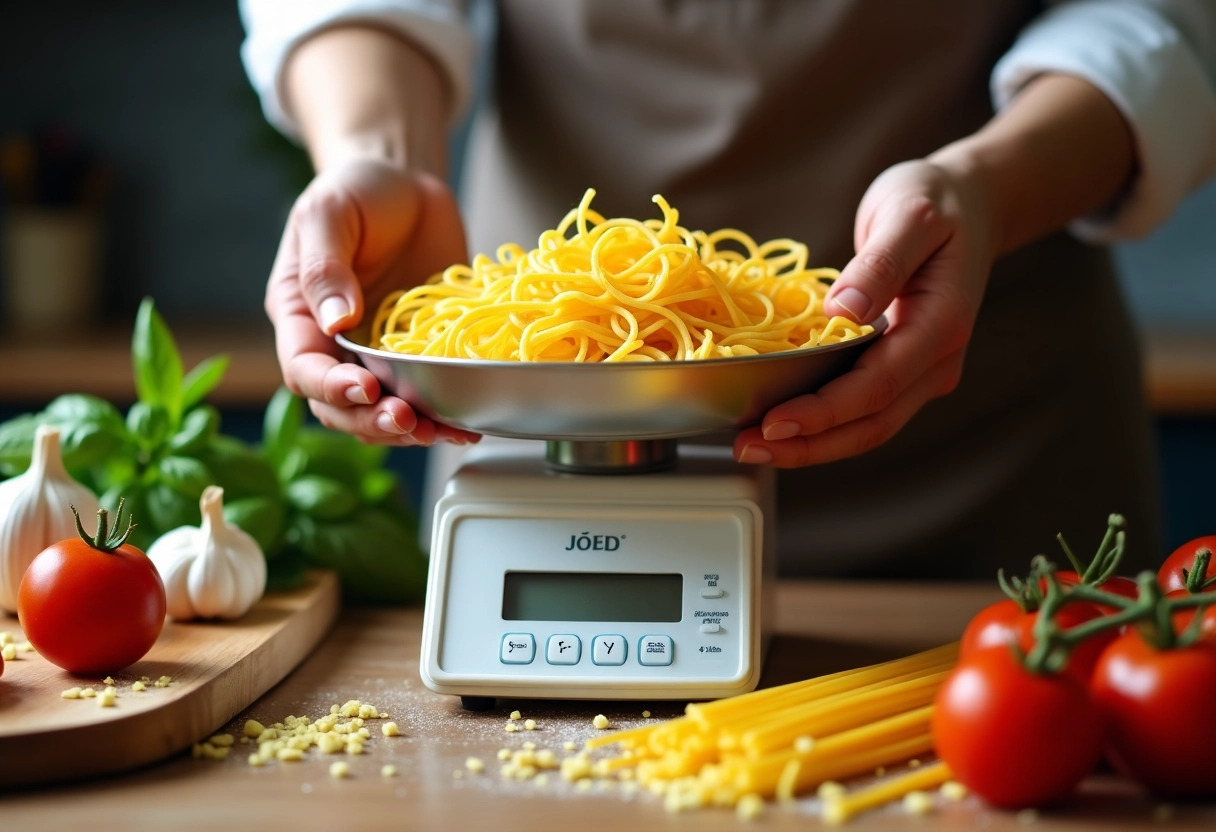
- A kitchen scale to weigh your dry pasta.
- A mustard glass or a yogurt pot for quick measurements: about 100 grams of dry pasta is equivalent to a filled mustard glass.
Adhering to these proportions allows for the preparation of a balanced meal while avoiding food waste.
Optimize the nutritional value of pasta for a balanced meal
To ensure your pasta dishes are not only tasty but also balanced, diversify the accompaniments. Vegetables, for instance, provide essential fiber, vitamins, and minerals. Integrate them generously into your recipes. Here are some suggestions:
- Add broccoli, spinach, or cherry tomatoes for a boost of vitamins and fiber.
- Incorporate chickpeas or lentils to increase the plant-based protein content.
Balancing with animal proteins
Animal proteins are also essential for structuring a balanced meal. Consider the following options:
- 150 g of chicken or turkey breast for a lean source of protein.
- A fish fillet of 100 to 120 g for beneficial omega-3 fatty acids for cardiovascular health.
Limit fats and sugary products
For a healthy diet, limit fats and sugary products. Prefer quality fats like olive oil over butter or margarine. Use reasonable amounts:
| Product | Recommended amount |
|---|---|
| Olive oil | 5 to 10 g |
| Butter | 5 to 10 g |
Dairy products and cheeses
Dairy products can enrich your pasta dishes, but watch the portions. A 125 g yogurt or 30 g of grated Gruyère cheese are reasonable additions. Moderate the amount of fresh cream and prefer lighter alternatives like cottage cheese or ricotta.
With these principles, you will optimize the nutritional value of your pasta-based meals while maintaining the dietary balance necessary for good health.