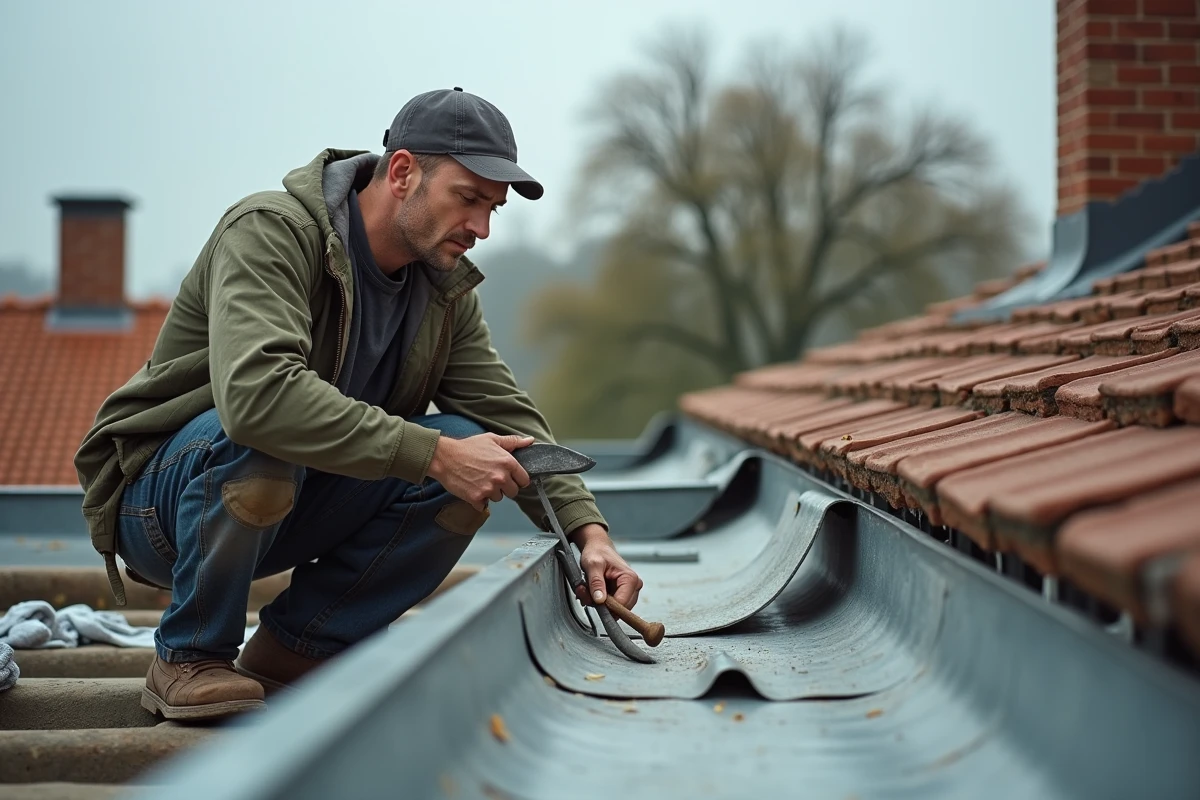
On a a renovation site for roofing, we often encounter the same problem: the zinc downspout is three centimeters too long, and it needs to be cut on-site without deforming it. Zinc can be sheared well, provided you choose the right tool and follow a few precautions that manufacturers’ instructions do not always highlight.
Pre-patinated and lacquered zinc: why the cutting method makes all the difference
Most gutters sold today are made of pre-patinated or lacquered zinc. This coating protects the metal from corrosion, but it imposes a constraint that many DIYers are unaware of.
Manufacturers like VMZINC specify in their installation instructions that using high-speed tools (grinders, cutting machines) can burn or alter the patina on the cutting edges. The result: a bare area, vulnerable to corrosion, which reduces the durability of the tube or profile.
We then learn to cut a zinc gutter easily by favoring low-speed tools, and this is the right reflex. If, despite everything, the cut was made with a grinder, the edge must be systematically touched up with a dedicated repair product provided by the manufacturer. Without this touch-up, corrosion cracks can appear in just a few seasons.
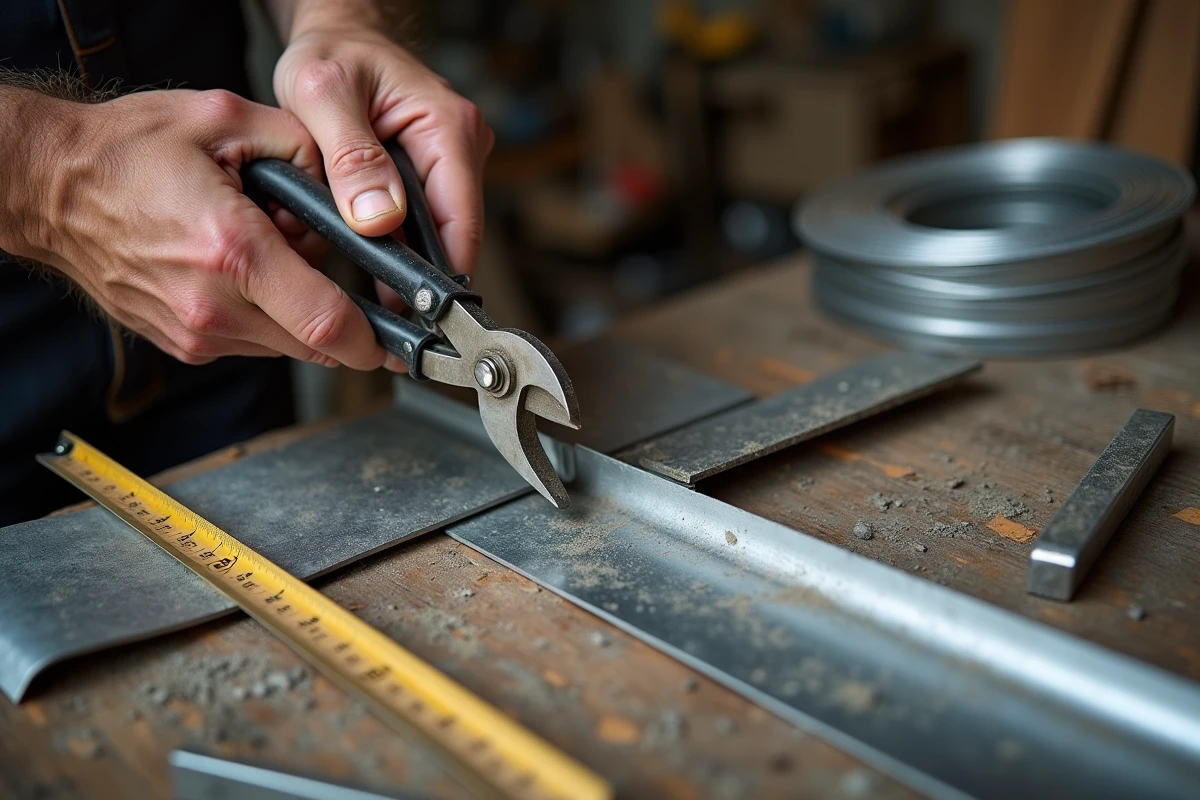
Shears, nibblers, or hacksaws: which tool to cut zinc gutters
The choice depends on the profile to be cut. A half-round gutter is not worked the same way as a square downspout.
Universal shears and pelican shears
The universal shears are suitable for straight cuts on standard thickness zinc. You mark with a marker, secure the piece, and shear in a steady pass. Shearing preserves the flatness of the metal without generating heat.
The pelican shears, with their curved blade, allow you to follow the curves of a half-round profile. They are also used for adjustments around a junction or an angle.
Electric nibbler
For repeated cuts or thicker materials, the nibbler cuts by nibbling without deforming the zinc. The investment is justified as soon as you need to recut several lengths of downspout on the same site.
Hacksaw and zinc worker’s claw
The hacksaw works on downspout tubes, but it produces burrs that must be carefully deburred. The zinc worker’s claw, on the other hand, is mainly used on flat sheets: you score the line, then bend to break the zinc. This technique is less suitable for a curved gutter profile.
- Universal or pelican shears: ideal for occasional cuts, no heat, good finish on pre-patinated zinc
- Nibbler: recommended for sites with multiple cuts, clean cut without deformation
- Hacksaw: a backup solution, but requires careful deburring to avoid injuries and corrosion points
- Grinder: to be avoided on pre-patinated or lacquered zinc, unless anti-corrosion touch-up of the edge after cutting
Respiratory protection and safety when cutting zinc
There is a lot of talk about gloves and goggles, but rarely about what we breathe. The INRS reminds us that the heating of zinc generates irritating fine particles for the respiratory tract. In poorly ventilated environments (attics, under-roof spaces, garages), the risk increases significantly.
For repeated or prolonged cuts, an FFP2 or FFP3 mask is recommended. This is not an excess of caution: fumes from heated zinc cause what is known as metal fever, a flu-like syndrome that occurs a few hours after exposure.
- Minimum FFP2 mask for cuts with a nibbler or saw indoors
- Cut-resistant gloves are mandatory, as the sheared edges of zinc are sharp
- Protective goggles if using a saw or grinder
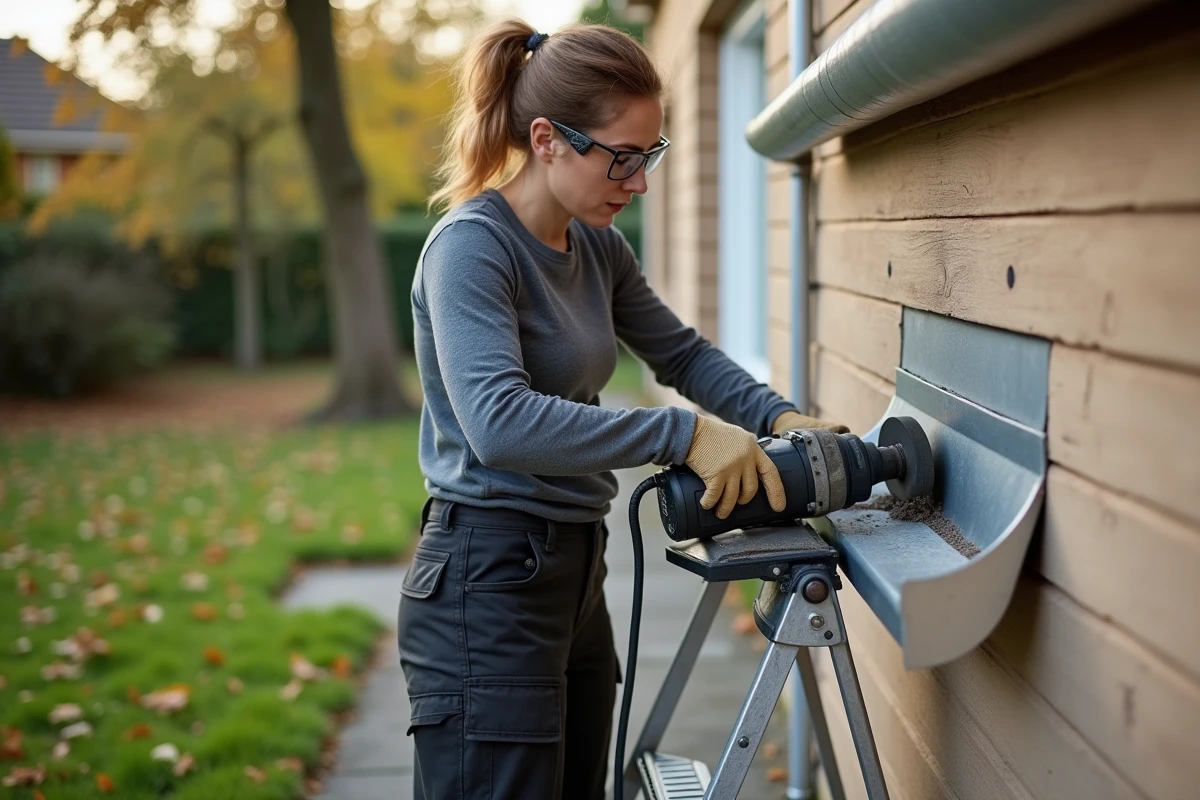
Deburring and sealing: the finishes that prevent leaks
A clean cut is not enough. A poorly deburred edge weakens the joint and the fixing collar. In the field, we regularly see downspouts where the burr has pierced the sealing mastic within a few months, causing a slow leak at the joint.
Deburring is done with a fine file or fine-grit sandpaper, always working in the direction of water flow. The action takes a minute, but it conditions the durability of the weld joint or repair mastic.
Consequences in case of damage
Home insurers like MAIF and Groupama report that non-compliant cutting can limit compensation in the event of water damage. If the expert finds a poorly deburred cut or a weakened section near a collar, the DIYer’s liability may be retained.
This point deserves attention. A well-installed zinc gutter lasts several decades. A sloppy cut can turn a routine replacement into a dispute with the insurance company, especially if the infiltration affects a party wall or a framework.
Before cutting, we check the marking, choose the tool suitable for the profile, and take the time to deburr and protect the edge. Zinc forgives many things, but not leaking joints.