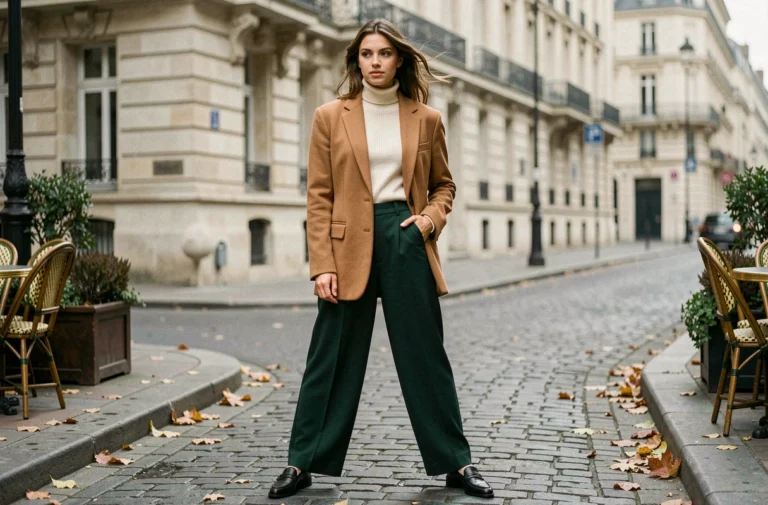
A fashion accessory refers to any item that complements an outfit without being the main piece of clothing: bag, belt, jewelry, glasses, scarf, shoes. Its role goes beyond decoration. A well-chosen accessory alters the perceived proportions of a silhouette, directs the gaze, and allows for variation in looks without renewing one’s wardrobe.
Fashion Accessories and Proportions: Understanding the Visual Effect on the Silhouette
Each accessory acts as a focal point. A belt worn at the waist creates a horizontal line that segments the silhouette into two distinct blocks, which can visually elongate the legs or define the shoulders.
A bag worn with a short strap raises the gaze towards the bust, while a handbag held low draws attention to the hips. These effects are not a matter of personal taste: they stem from how the human eye follows lines and contrasts.
Minimalist jewelry placed near the face (earrings, short necklace) concentrates attention on the upper body. Conversely, a chunky bracelet or a watch with a large dial visually broadens the wrist. Before accumulating pieces, it is better to identify the area of the silhouette you wish to highlight, then choose one or two accessories that direct the gaze towards that specific area.
To explore a selection that covers these different categories, you can check all accessories on Mademoiselle Camille and compare shapes according to the desired effect.
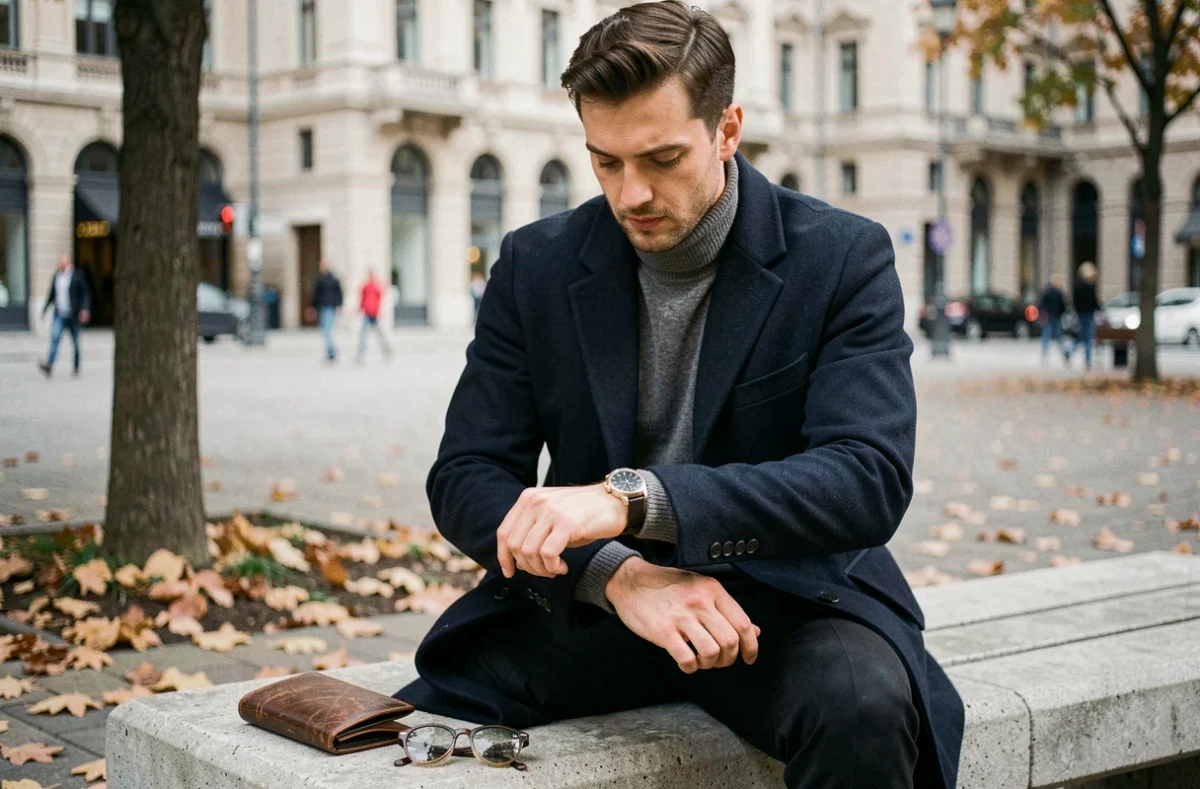
Colors and Materials of Accessories: Building Outfit Coherence
The color of an accessory interacts with that of the clothing according to a simple principle: contrast attracts, continuity unifies. A red bag against a black outfit immediately captures the eye. A black bag on the same outfit extends the silhouette without visual interruption.
In practice, two approaches work daily without requiring advanced knowledge of color theory.
- The tonal approach: choose accessories in the same color family as the outfit, but with a slight variation in shade or material (matte leather on shiny cotton, for example). The result appears crafted without apparent effort.
- The accent approach: wear an outfit in neutral tones (black, white, beige, gray, navy) and introduce a single bright color through an accessory. A mustard scarf, turquoise earrings, or a burgundy belt are enough to structure the look.
- The material approach: on a light summer ensemble, a leather or metal accessory adds visual weight. On a thick winter outfit (wool, knit), a fine metal piece creates a texture contrast that lightens the whole.
A common pitfall is to multiply different materials in the same look. Two contrasting materials maximum per outfit avoid a cluttered effect.
Durability and Repair: Choosing an Accessory That Lasts
Since January 1, 2025, certain companies exceeding the thresholds set by regulations must publish an environmental report for the products concerned. This report provides information on recycled materials, manufacturing traceability, recyclability, and the presence of plastic microfibers. Reading this data before purchase provides more reliable information than vague mentions like “responsible” or “eco-responsible.”
The Repair Bonus, managed by Refashion, offers an immediate discount at certified repairers for certain interventions: shoe repair, zipper replacement, lining repair. An accessory that is easy to maintain or repair (accessible seams, replaceable hardware) can have a lower cost of use than a cheaper but disposable piece.
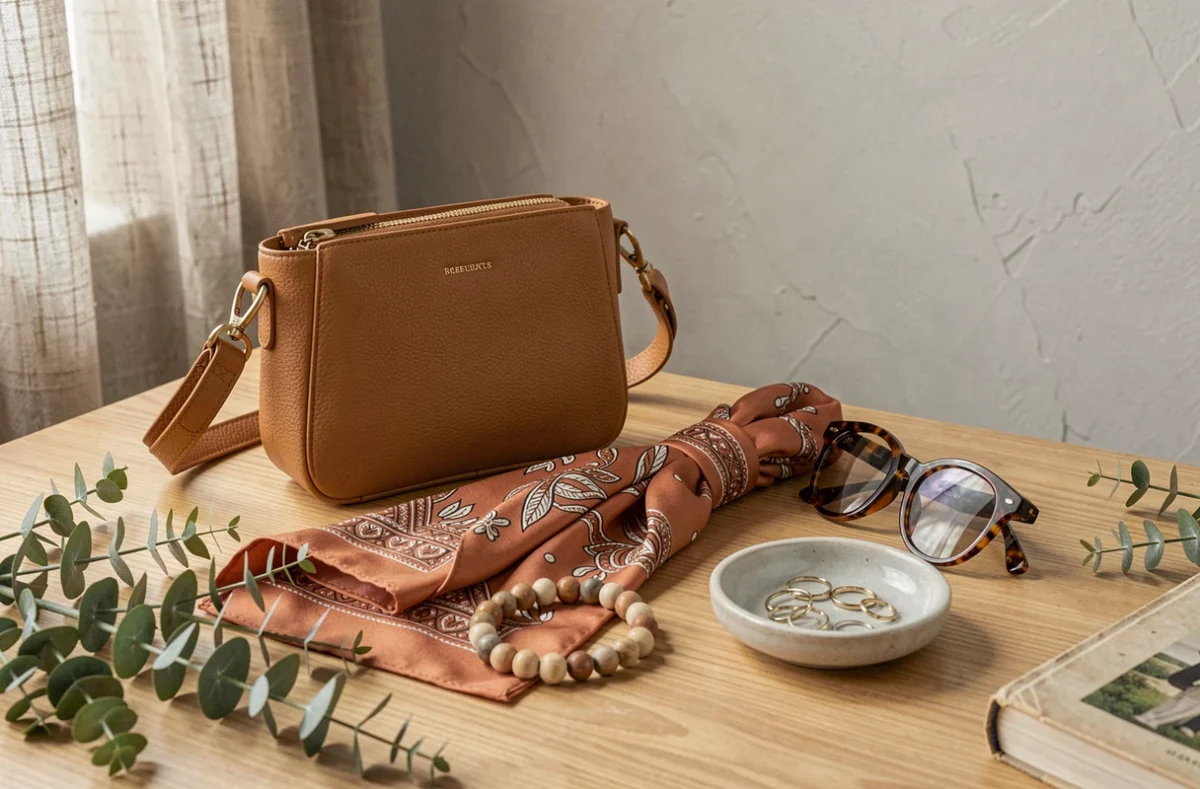
Second-Hand as an Accessorizing Strategy
The French second-hand market for clothing, shoes, and textiles continued to grow in 2025. For fashion accessories, this trend presents a concrete advantage: leather bags, belts, and metal jewelry often age better than clothing, as they are less subjected to wear from repeated washing.
Buying a second-hand full-grain leather bag or a refurbished brand-name pair of sunglasses allows access to superior craftsmanship for a budget equivalent to that of entry-level new items. Traceability remains a point of vigilance: checking the condition of seams, clasps, and hinges before purchase avoids unpleasant surprises.
Accessories by Season: Adapting Style Without Overloading
A common mistake is wearing the same accessories all year round. The visual weight and functionality of an accessory change with the season.
In winter, a wool scarf or a beanie adds volume around the neck and head. They alter proportions as much as jewelry does. Adding a statement necklace over a chunky knit creates a layering effect that muddles the silhouette. It is better to reserve visible jewelry for lighter outfits and let warm textiles play their role as accessories in the cold season.
In summer, sunglasses become the most visible accessory on the face. The shape of the frame interacts directly with the shape of the face: an angular frame softens a round face, while a rounded frame mitigates strong features. The choice of frame deserves as much attention as that of a pair of earrings.
A final often-overlooked point: shoes are a complete accessory in their own right. They anchor the outfit to the ground and define the style (casual, dressy, sporty). Changing shoes on the same outfit is sometimes enough to transition from a work look to an outing outfit, without touching the rest.
The most useful accessory remains the one you wear regularly because it integrates into multiple outfits and withstands use. Three versatile and durable pieces provide more service than a dozen fragile items forgotten in a drawer.